

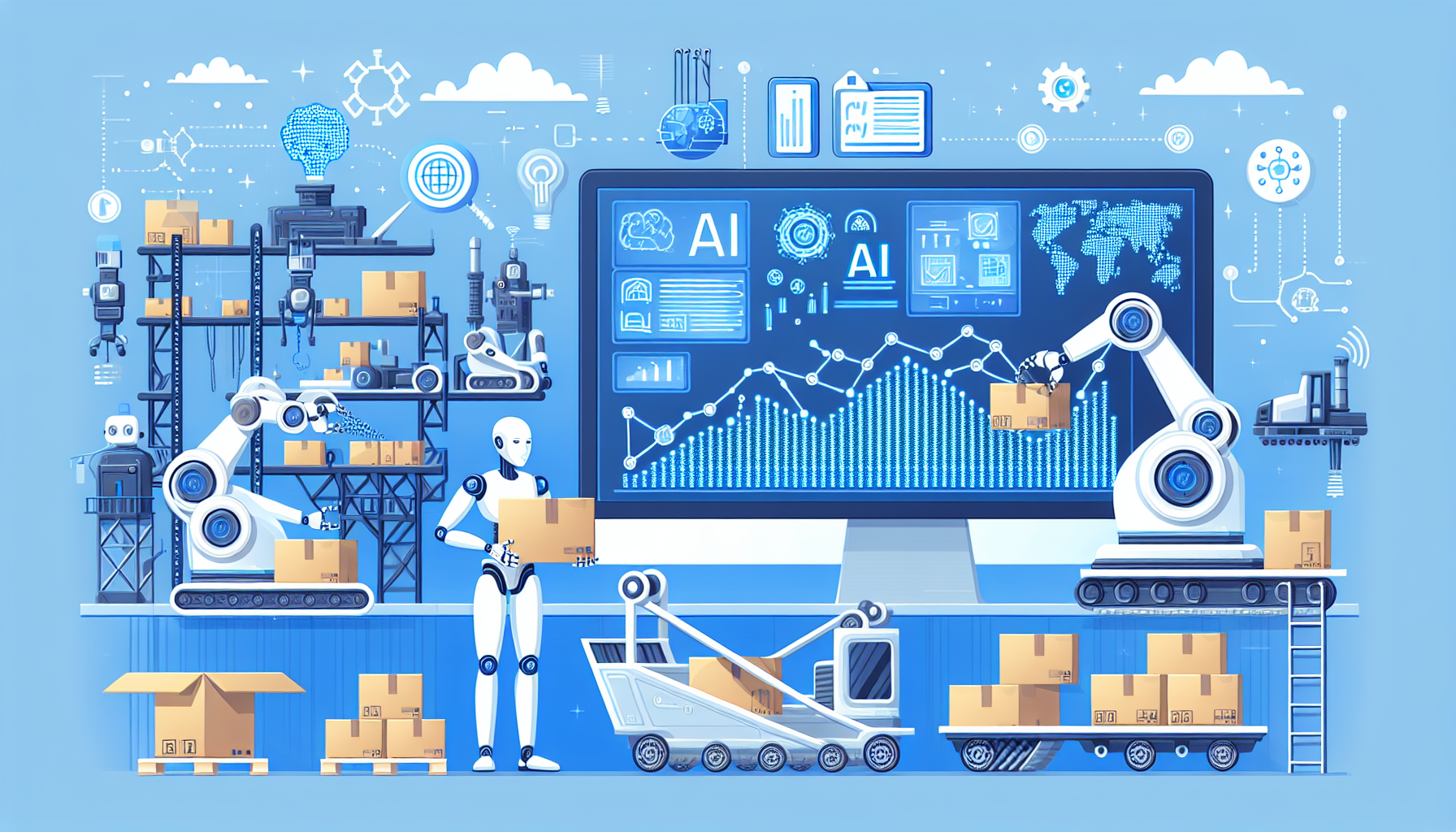

Understanding the Role of AI in Supply Chain Management
Artificial Intelligence (AI) has revolutionized numerous fields, and supply chain management (SCM) is no exception. The integration of AI and automation in SCM streamlines operations, enhances efficiency, and significantly reduces costs. AI technologies utilize data from multiple sources, employing sophisticated algorithms to analyze patterns and predict future trends. This capability allows businesses to make informed decisions, optimize inventory levels, and enhance customer satisfaction.
Enhancing Demand Forecasting
Accurate demand forecasting is crucial for effective SCM. Traditional forecasting methods often rely on historical data and simplistic models, leading to inaccuracies. AI, however, employs advanced techniques such as machine learning to analyze complex data inputs, including market trends, seasonal variations, and consumer behavior. By predicting demand with higher accuracy, businesses can align their inventory levels more closely with consumer needs, reducing excess stock and minimizing stockouts.
Optimizing Inventory Management
Effective inventory management is another area where AI and automation shine. With AI-driven inventory management systems, businesses can monitor stock levels in real time. These systems can identify items that sell quickly and those that lag, thus facilitating better procurement decisions. Automated reordering processes ensure that goods are replenished just in time, reducing holding costs and warehouse space utilization.
Streamlining Logistics and Distribution
Logistics is a significant component of SCM, comprising the movement of goods from suppliers to customers. AI algorithms can optimize transportation routes and schedules, factoring in traffic conditions, weather forecasts, and fuel prices. By identifying the most efficient routes, companies can reduce delivery times and costs. Additionally, AI-powered predictive analytics help anticipate potential disruptions in the supply chain, enabling businesses to implement contingency plans proactively.
Enhancing Supplier Management
AI can also improve supplier relationship management (SRM). Advanced analytics allow companies to assess supplier performance continually, examining factors like delivery reliability, quality metrics, and compliance with regulations. This insight enables businesses to make data-driven decisions when selecting suppliers and negotiating contracts. Furthermore, AI can facilitate communication between businesses and suppliers, automating routine inquiries and freeing up time for strategic discussions.
Automating Routine Tasks
Automation reduces manual labor and minimizes errors in supply chain processes. Routine tasks such as data entry, invoice processing, and order tracking can be automated with AI technologies. This not only improves accuracy but also allows employees to focus on more strategic tasks, enhancing overall productivity. For example, chatbots can handle customer queries regarding order status or product availability, providing instantaneous responses and improving customer experience.
Utilizing IoT and AI Combined
The Internet of Things (IoT) complements AI in SCM by providing real-time data from connected devices throughout the supply chain. Sensors can monitor temperature, humidity, and location, giving companies insights into their products in transit. When combined with AI analytics, businesses can gain a holistic view of their supply chains, enabling smarter decision-making and improved operational visibility.
Risk Management in Supply Chains
Risk management is a critical aspect of supply chain strategy. The volatility of global markets, natural disasters, and political uncertainties can disrupt the flow of goods. AI models provide predictive analytics that can simulate various scenarios, helping businesses anticipate risks and devise mitigation strategies. Identifying vulnerabilities across the supply chain allows organizations to create more resilient operations.
Improving Customer Satisfaction
AI-driven SCM does not only optimize internal processes but also enhances customer experiences. By anticipating customer preferences and behaviors, businesses can personalize offerings and improve service levels. Automated order tracking systems provide customers with real-time updates, significantly improving transparency and trust. Additionally, machine learning algorithms can analyze feedback and reviews, allowing companies to make necessary adjustments to their products or services.
ESG Compliance and Sustainability
Environmental, social, and governance (ESG) criteria are becoming increasingly important in supply chain management. AI can optimize resource utilization, reduce waste, and enhance compliance with sustainability regulations. For instance, by analyzing suppliers’ environmental impacts, organizations can make conscious decisions that align with their sustainability goals. Automation can also streamline the reporting processes associated with ESG compliance, making it easier to maintain standards.
Challenges in Implementing AI and Automation
Despite the numerous benefits, the implementation of AI and automation in supply chains comes with challenges. One major hurdle is the integration of disparate systems. Many organizations still rely on legacy systems that may not be compatible with modern AI technologies. Additionally, there are concerns about data privacy and security, particularly as companies collect more data from various sources.
Another challenge is the potential resistance from employees who may fear job displacement due to automation. To address this, organizations should focus on reskilling and upskilling their workforce, preparing them to work alongside AI technologies rather than replacing them.
The Future of AI and Automation in SCM
The future of supply chain management is undoubtedly tied to the advancements in AI and automation. As machine learning models become more sophisticated, businesses will likely leverage AI for more complex decision-making processes. Furthermore, as automation technologies continue to evolve, organizations may find innovative ways to enhance efficiency and responsiveness in their supply chains.
Robotics, autonomous vehicles, and drones are already making their way into logistics, and their use will likely become more widespread, further transforming the SCM landscape. As supply chains become increasingly interconnected through IoT devices, AI’s role in optimizing these networks will only grow in significance.
Conclusion
Leveraging AI and automation in supply chain management enables businesses to enhance operational efficiency, reduce costs, and improve service levels. As these technologies continue to evolve, organizations that embrace them will be better positioned to thrive in an increasingly competitive marketplace. By continuing to innovate and invest in new technologies, the supply chain landscape will become more resilient, responsive, and aligned with market demands. The ongoing journey toward digitally transformed supply chains promises immense opportunities for strategic improvement and competitive advantage.
 English