

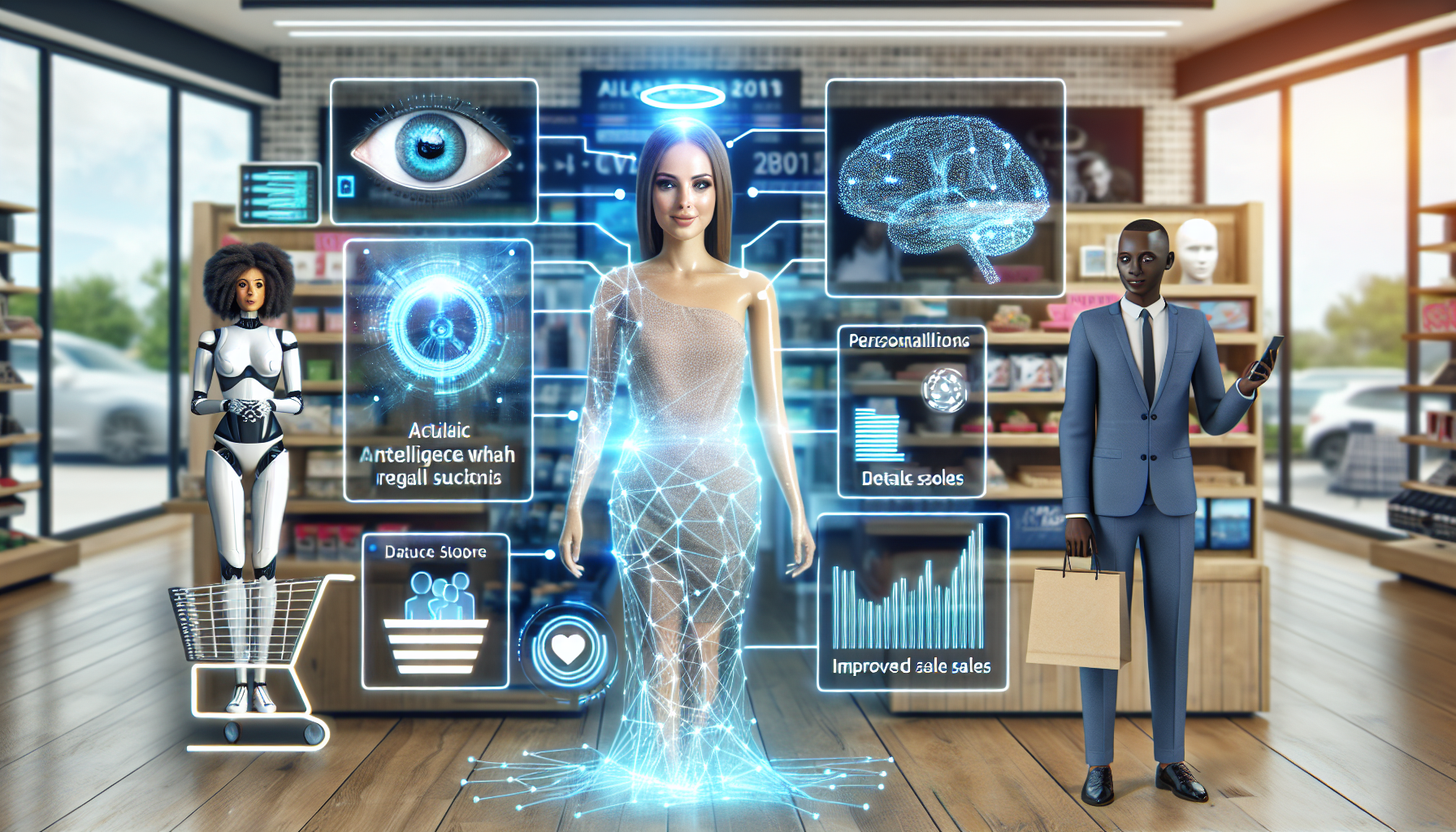

How AI is Enhancing Personalized Marketing Strategies in Retail
Understanding AI in Retail Marketing
Artificial Intelligence (AI) represents a groundbreaking force in the retail sector, particularly in the domain of personalized marketing strategies. By harnessing large datasets and complex algorithms, retailers can analyze customer behaviors, preferences, and trends, effectively creating tailored marketing campaigns that resonate with individual customers.
The Role of Data in Personalization
At the heart of AI-driven retail marketing is data. Retailers gather vast amounts of information from various customer touchpoints, including website interactions, purchase histories, social media activities, and loyalty programs. This data is not just quantitative but also qualitative, encompassing customer sentiments and emotions that can be gleaned from reviews and feedback.
AI systems, using machine learning algorithms, can process and analyze this data efficiently, uncovering patterns and insights that humans might overlook. For instance, a customer who frequently buys vegan products can be targeted with promotions or recommendations for new plant-based items.
Segmentation and Targeting
AI enhances customer segmentation, a critical aspect of personalized marketing. Traditional segmentation often relies on demographic factors like age, gender, and income. However, AI introduces dynamic segmentation that considers behaviors, purchasing habits, and even real-time interactions.
Advanced algorithms can cluster customers into micro-segments, allowing retailers to tailor marketing messages that are more specific and relevant. For example, a athletic wear retailer might create campaigns specifically aimed at high-intensity fitness enthusiasts, casual joggers, or yoga practitioners, significantly increasing the likelihood of conversion.
Predictive Analytics for Enhanced Engagement
Predictive analytics is a primary application of AI in retail marketing. By analyzing past behaviors, machine learning models can forecast future customer actions, allowing retailers to engage customers at the right time. For example, if a customer frequently buys running shoes every six months, AI can trigger reminders or offers as that timeline approaches.
Moreover, predictive tools can personalize the shopping experience by suggesting products before customers even realize they want them. For instance, AI-driven recommendation systems help retailers show relevant items based on users’ browsing and shopping behaviors, driving both upsells and cross-sells.
Behavioral Insights and Custom Content
AI technology can analyze customer interactions in-depth to uncover valuable behavioral insights. By understanding how customers navigate a website or interact with an app, retailers can refine their content strategy.
For example, if analysis shows that customers linger on lifestyle blog posts about outdoor adventures, a retailer could enhance its content marketing efforts by producing more adventure-themed articles and campaign visuals aimed at inspiring wanderlust. AI can also optimize email marketing campaigns by personalizing content based on user preferences and behaviors.
Chatbots and AI Customer Service
Integrating AI-powered chatbots into retail operations enhances customer engagement significantly. By providing instant responses to queries, chatbots improve the customer experience while simultaneously gathering data on common customer inquiries and preferences.
This real-time interaction facilitates personalized recommendations, as chatbots can suggest products based on previous conversations and interactions. For instance, if a customer asks about winter jackets, a chatbot equipped with AI can analyze their past purchases and offer suitable options that align with their preferences.
Dynamic Pricing Strategies
AI is revolutionizing pricing strategies by enabling dynamic pricing models. Retailers can employ AI algorithms to analyze market conditions, competitor prices, and customer demand in real-time, allowing them to adjust prices accordingly.
For example, if demand for a particular gadget spikes during a holiday season, AI can recommend price adjustments that optimize sales without alienating price-sensitive customers. These dynamic pricing strategies can be customized for individual consumers, offering personalized deals to those most likely to convert.
Enhanced Customer Loyalty Programs
AI also plays a pivotal role in enriching customer loyalty programs. By analyzing customer purchase behavior, AI helps retailers design loyalty initiatives that resonate specifically with individual preferences.
For instance, if a customer often purchases organic products, a retailer might offer exclusive discounts or loyalty points for those products. More sophisticated AI models can even identify when customers are likely to become disengaged and proactively trigger retention campaigns tailored to encourage re-engagement.
Utilizing Augmented Reality (AR)
The intersection of AI and AR is creating new avenues for personalized marketing in retail. AR enhances the shopping experience, allowing customers to visualize how a product will fit into their lives before making a purchase. Retailers can employ AI to offer personalized AR experiences.
For example, fashion retailers can implement virtual fitting rooms powered by AI, enabling customers to ‘try on’ clothes digitally based on their size and style preferences. This personalization not only boosts customer satisfaction but also decreases return rates.
Optimizing Omnichannel Experiences
Today’s consumers interact with brands across multiple platforms. AI technologies enable retailers to provide a seamless omnichannel experience that is tailored to individual customer journeys.
By using AI to track customer interactions across web, mobile, and physical store environments, retailers can create a cohesive and personalized experience. For instance, a shopper who browses for shoes online can receive recommendations when they visit the store, enhancing the likelihood of a purchase.
Continuous Learning and Adaptation
One of the notable advantages of AI in personalized marketing is its ability to learn and adapt continuously. The more data these systems process, the better they become at predicting customer preferences.
By employing feedback loops where the AI system receives data on the success of marketing campaigns in real-time, retailers can iterate quickly, adjusting messaging and offers to improve engagement rates. This adaptive marketing approach is essential in a fast-evolving retail landscape.
Cross-Channel Personalization
Retailers can leverage AI to ensure cross-channel personalization, making sure that customers experience consistency in their interactions with the brand across various channels. AI analyzes data across online and offline platforms to understand customer behavior holistically.
When a customer views a product online and later visits a physical store, AI systems can enable sales associates to access that customer’s browsing history, thus allowing them to provide personalized recommendations. Such cross-channel efforts build a deeper emotional connection between consumers and the brand.
Conclusion
Incorporating AI into personalized marketing strategies allows retailers to create more meaningful engagements with customers. From predictive analytics and customer segmentation to dynamic pricing and loyalty programs, AI technologies empower retailers to tailor their marketing efforts effectively. Retailers that embrace these technologies can improve customer satisfaction, drive loyalty, and, ultimately, enhance revenue through their targeted efforts. The future of retail marketing lies in leveraging the power of AI to create highly personalized experiences that resonate with individual customers, making the shopping experience not only pleasant but exceptional.
 English