

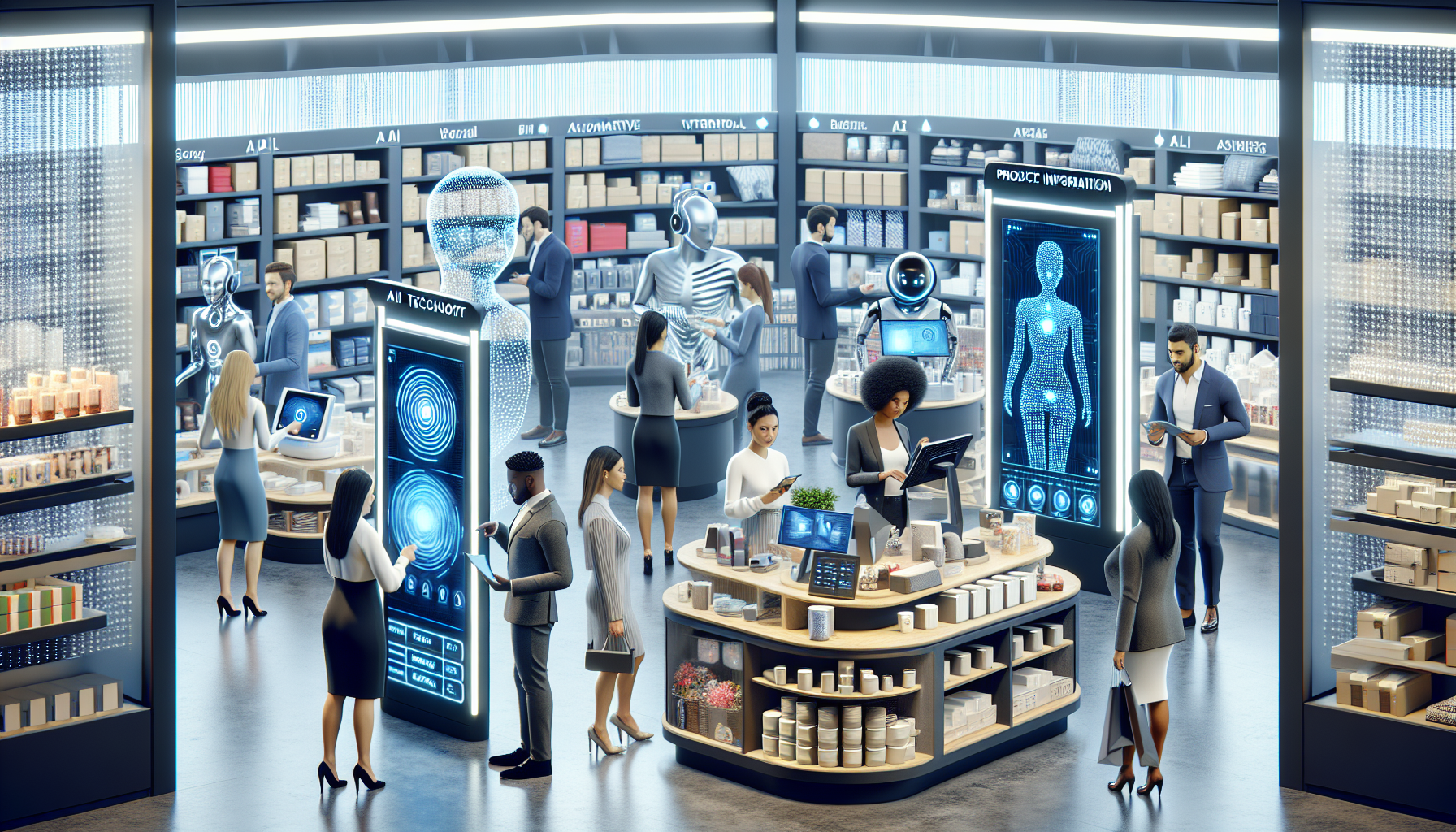

Examples of Successful AI Integration in Retail Businesses
1. Amazon: Personalization Through AI Algorithms
Amazon utilizes AI to enhance customer experience through personalized recommendations. By employing algorithms that analyze user behavior and previous purchases, Amazon offers tailored product suggestions, effectively increasing conversion rates. Their recommendation engine generates around 35% of total sales, illustrating how AI can drive engagement and sales in retail.
2. Walmart: Inventory Management Optimization
Walmart has implemented AI-powered systems for inventory management, which help optimize stock levels and reduce food waste. By analyzing past sales data, seasonal trends, and local demand patterns, Walmart can predict inventory needs at its stores more accurately. This integration has led to reduced costs, improved product availability, and enhanced customer satisfaction.
3. Sephora: Virtual Try-On Technology
Sephora employs AI technology through its Virtual Artist tool, allowing customers to try on makeup virtually using augmented reality. This innovative feature not only enhances the shopping experience by allowing consumers to visualize products on themselves but also boasts a significant increase in conversions as customers feel more confident in their purchases.
4. Target: Predictive Analytics for Personalization
Target uses predictive analytics to better understand customer preferences and shopping habits. By analyzing data from loyalty programs, Target can personalize marketing campaigns and product recommendations, increasing the effectiveness of their promotions. This targeted approach enhances customer engagement, attracting and retaining loyal shoppers.
5. H&M: Chatbots for Customer Service
H&M has integrated AI chatbot technology into its customer service operations to provide instant support and assistance to customers. These chatbots can handle inquiries related to order status, product availability, and returns, enhancing the shopping experience by providing instant responses and reducing wait times, thereby increasing customer satisfaction and brand loyalty.
6. Lowe’s: In-Store Navigation Assistance
Lowe’s uses AI-driven robots to improve customer service within their stores. These robots assist shoppers in locating products by providing navigation assistance. By leveraging computer vision and machine learning, the robots can map store layouts, enabling customers to find items efficiently, ultimately streamlining the shopping process.
7. Nike: AI-Powered Customization
Nike employs AI for its Nike By You program, enabling customers to customize their shoes. By analyzing customer input and popular trends, Nike offers personalized design options, creating a unique shopping experience that drives engagement and loyalty while leveraging AI to stay on top of consumer preferences in real-time.
8. Uniqlo: Automated Inventory Management
Uniqlo has embraced AI to forecast demand and automate inventory management processes. By analyzing sales data and shopper behavior, the AI system optimizes stock levels across its various outlet stores, ensuring that popular items are readily available while minimizing excess inventory, enhancing operational efficiency.
9. ASOS: Visual Search Capabilities
ASOS, a leading online fashion retailer, has integrated AI-driven visual search technology into their app, allowing users to upload images and find similar products in their catalog. This feature elevates the customer shopping experience, making it easy for consumers to find what they’re looking for and improving site engagement metrics.
10. Macy’s: In-App Personalized Recommendations
Macy’s has employed AI to deliver in-app product recommendations tailored to individual shopper profiles. By analyzing browsing data and purchase history, Macy’s enhances the shopping experience by suggesting curated items, leading to increased online sales and improved customer satisfaction.
11. Alibaba: Smart Retail in Physical Stores
Alibaba’s ‘New Retail’ strategy combines online and offline shopping experiences through the use of AI and data analytics. In physical stores, customers can scan items for additional information using the Alibaba app, which learns from shopper behavior to recommend products, ultimately bridging the gap between digital and in-store experiences.
12. Zalando: AI-Driven Styling Recommendations
Zalando utilizes AI to provide personalized styling recommendations to customers. The AI analyzes user preferences and trends to suggest outfits and accessories, enhancing the shopping experience while driving additional sales. This technology has allowed Zalando to differentiate itself in a crowded market.
13. The Home Depot: Voice-Activated Shopping
The Home Depot has integrated AI with voice-activated technology through its app, allowing customers to search for products using voice commands. This innovation simplifies the shopping journey for users, particularly in-store navigation, and enhances the overall shopping experience by integrating modern conveniences that customers expect.
14. Nordstrom: AI for Fraud Detection
Nordstrom employs AI to enhance its fraud detection processes within its e-commerce operations. Machine learning models analyze transaction patterns to identify fraudulent activities quickly, helping to reduce losses while protecting customers. This proactive approach to security enhances trust and confidence among consumers.
15. IKEA: AR for Furniture Placement
IKEA has innovatively integrated AR technology into its app, allowing customers to visualize how furniture items will look in their own homes before purchasing. This AI-powered tool not only reduces returns due to mismatches in expectations but also provides an engaging shopping experience that directly influences buying decisions.
16. Tesco: AI in Pricing Strategy
Tesco leverages machine learning algorithms to optimize its pricing strategy across its product range. By analyzing competitive pricing, demand elasticity, and inventory levels, Tesco adjusts its prices dynamically, enhancing its competitiveness in the market while ensuring profitability.
17. Walgreens: Prescription Management AI
Walgreens utilizes AI to help customers manage their prescriptions more effectively. By engaging customers through various platforms like chatbots or mobile applications, Walgreens can facilitate prescription refills and remind customers of upcoming medications, thereby improving adherence rates and customer health outcomes.
18. eBay: Image Recognition for Listings
eBay employs AI-driven image recognition technology in its app, allowing sellers to upload pictures for automatic listing creation. This not only simplifies the selling process for users but also enhances the overall user experience, paving the way for increased transaction volumes on the platform.
19. Kohl’s: Automated Price Matching
Kohl’s has integrated AI to automatically price match competitors’ offerings. By continuously monitoring external pricing data, Kohl’s adapts its prices in real-time. This strategic use of AI not only ensures that Kohl’s remains competitive but also bolsters customer loyalty by guaranteeing the best prices.
20. Best Buy: AI for Enhanced Website Chat
Best Buy implemented AI-driven chat technology on its website, providing customers with instant assistance while they browse. The chatbots can answer questions, recommend products, and even assist with purchases, streamlining the online shopping process and enhancing overall user engagement with the brand.
By leveraging AI technology, retail businesses are transforming customer experiences, optimizing operational efficiencies, and driving revenue growth. The adoption of AI solutions continues to evolve, offering unique applications that cater to the dynamic landscape of retail.
 English