

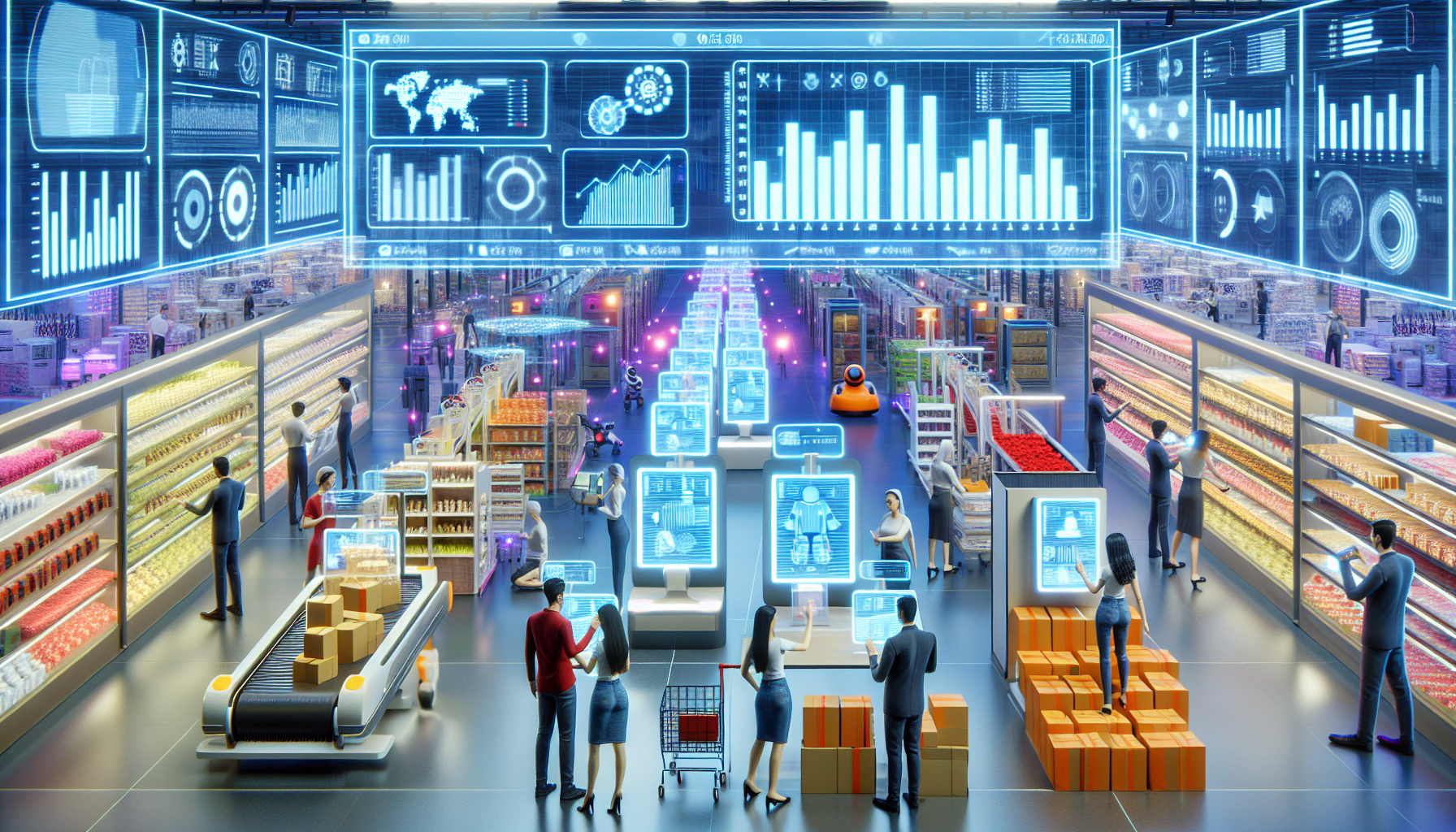

AI and Automation in Retail: Transforming Customer Experience and Supply Chains
The landscape of retail is experiencing a seismic shift, driven by advancements in Artificial Intelligence (AI) and automation. These technologies are not just enhancing operational efficiencies; they are fundamentally reshaping the customer experience and redefining supply chain dynamics in a way that creates more personalized, efficient, and engaging shopping experiences.
AI in Retail: An Overview
AI refers to the simulation of human intelligence in machines programmed to think and learn. In retail, AI applications span across various functions, including customer service, inventory management, product recommendations, and dynamic pricing. By leveraging algorithms and data analytics, retailers can sift through vast amounts of data to uncover insights that drive decision-making processes.
Enhancing Customer Experience with AI
Personalized Shopping Experience
Consumers today expect a shopping experience tailored to their individual preferences. AI enables retailers to analyze customer data—purchases, browsing behavior, and social media interactions—to curate personalized product recommendations. Companies like Amazon exemplify this strategy with their recommendation engines, which account for approximately 35% of their sales. By offering customers the products they are most likely to purchase, retailers can significantly enhance conversion rates.
Chatbots and Virtual Assistants
Chatbots powered by AI have emerged as crucial tools in retail. These virtual assistants can engage with customers 24/7, providing responses to inquiries, assisting in product selection, and processing orders. They reduce wait times and improve customer satisfaction through instant service. Leading brands, such as Sephora, have integrated chatbots into their platforms, allowing customers to receive makeup advice and product suggestions seamlessly.
Visual Search
Visual search technology, which allows customers to search for products using images instead of words, is gaining traction in retail. This convenience accelerates the search process and enhances user engagement. Retailers like ASOS and IKEA have implemented visual search capabilities, enabling customers to upload images to find similar products, thus bridging the gap between online and offline shopping behaviors.
Automation in Retail: Streamlining Operations
Inventory Management
Automation plays a pivotal role in inventory management. Automated systems powered by AI can predict demand, optimize stock levels, and manage reorder points effectively. For instance, Walmart utilizes sophisticated algorithms to track inventory levels across its stores and warehouses, ensuring that stock is replenished just in time to meet customer demand. This reduces the likelihood of stockouts and cut excess inventory costs.
Robotics in Warehousing
Retail giants are deploying robotics in their distribution centers to streamline operations. Automated Guided Vehicles (AGVs) and robotic pickers enhance the picking and packing process, increasing efficiency and accuracy. Companies like Amazon have pioneered the use of Kiva robots, which seamlessly transport products to workers, significantly reducing the time taken to fulfill orders.
Self-Checkout Systems
Self-checkout technology enables customers to scan and pay for their purchases without cashier assistance. This automation drastically reduces checkout times, enhancing the shopping experience. Retailers such as Kroger and Tesco have implemented these systems successfully, allowing customers to have greater control over their shopping journey, while simultaneously freeing staff to attend to more complex tasks.
Supply Chain Optimization through AI and Automation
Predictive Analytics
AI’s predictive analytics capabilities allow retailers to forecast trends and customer demand patterns accurately. By analyzing historical sales data, weather patterns, and even social media trends, retailers can make informed decisions about inventory management and supply chain logistics. For example, Target uses predictive analytics to align inventory levels with consumer demand during seasonal peaks, reducing waste and improving customer satisfaction.
Supplier Collaboration
AI facilitates better collaboration with suppliers, improving relationships across the supply chain. Real-time data sharing allows retailers and suppliers to work together more effectively. Automated platforms enable seamless communication, ensuring that everyone involved in the supply chain is aware of changes in demand and stock levels. This transparency lowers lead times and reduces the complexities often associated with supply chain management.
Efficient Delivery Solutions
AI and automation are also transforming last-mile delivery solutions. Companies like Instacart and DoorDash employ AI-driven algorithms to optimize delivery routes, ensuring that products reach consumers faster and more efficiently. Drones and autonomous vehicles are emerging technologies set to revolutionize delivery services, minimizing human labor costs while maximizing delivery speed.
Challenges and Considerations
While AI and automation in retail offer numerous benefits, several challenges must be acknowledged. Implementing advanced technologies requires substantial investment and commitment from organizations. Moreover, the integration of these systems with existing infrastructure can prove complex. Retraining staff and managing job displacement concerns also remain critical issues, as certain roles may become redundant due to automation.
The Role of Data Security and Privacy
As retailers collect vast amounts of customer data to fuel AI applications, data security and privacy concerns become paramount. Retailers must be vigilant in protecting customer information and ensuring compliance with regulations such as GDPR. Building trust with consumers is essential, and transparent data practices will be crucial for the sustainable growth of AI applications in retail.
Future Prospects
The future of retail is promising, with AI and automation continuing to evolve. As technology advances, retailers will likely adopt even more sophisticated AI systems that allow for real-time decision-making, further enhancing customer experiences. From augmented reality shopping experiences to increasingly intelligent supply chain systems, the potential for innovation is vast.
Continued investment in research and development will enable retailers to explore new AI applications, driving not only internal efficiencies but also ensuring the differentiation of customer experiences. Overall, embracing AI and automation will be pivotal for retailers seeking to thrive in an ever-competitive landscape.
 English