


AI in Retail: Transforming Customer Experience through Automation
Understanding AI in Retail
The retail industry has always been susceptible to shifts in consumer behavior and market trends. As technology evolves, artificial intelligence (AI) has emerged as a game changer, enabling retailers to streamline operations, personalize services, and enhance customer engagement. By incorporating AI into their strategies, retailers can leverage data analytics, machine learning, and automation to create a more efficient shopping experience.
Personalization at Scale
One of the most powerful applications of AI in retail is the ability to offer personalized experiences at scale. Machine learning algorithms analyze vast amounts of data—such as past purchases, browsing behaviors, and demographic information—to tailor recommendations specifically for individual customers. This is evident in e-commerce giants like Amazon, where product suggestions based on user behavior encourage upselling and cross-selling, optimizing the buying journey.
Implementing AI-driven personalization involves using collaborative filtering and predictive analytics. With collaborative filtering, AI systems categorize users with similar shopping patterns, recommending products that have appealed to similar customers. Predictive analytics, on the other hand, utilizes historical data to forecast what products customers might be interested in, based on purchasing trends.
Chatbots and Customer Service Automation
Chatbots represent another revolutionary application of AI in retail, providing 24/7 customer service. These AI-driven tools can handle a myriad of customer inquiries, from product details to order processing and returns. According to research by Juniper Networks, chatbots are expected to save retailers up to $11 billion annually by 2023 through automation of customer interactions.
Using Natural Language Processing (NLP), chatbots can understand and respond to customer queries in colloquial language. Enhanced machine learning capabilities also allow these bots to learn from customer interactions, improving over time and providing more accurate and instant responses. This reduces wait times significantly, enhancing overall customer satisfaction.
Inventory Management Optimization
AI’s capabilities extend beyond customer interactions; it also plays a crucial role in inventory management. Traditional inventory systems rely heavily on manual updates, which can lead to errors and inefficiencies. AI-driven solutions, however, provide real-time analytics, predicting stock levels, and ensuring that popular items are always available.
Retailers like Walmart and Target utilize AI algorithms to analyze product demand patterns, seasonal trends, and external factors such as weather forecasts and local events. This predictive capability helps maintain optimal stock levels, which in turn reduces instances of overstock and stockouts, ensuring that customers find what they need when they need it.
Enhancing In-Store Experience
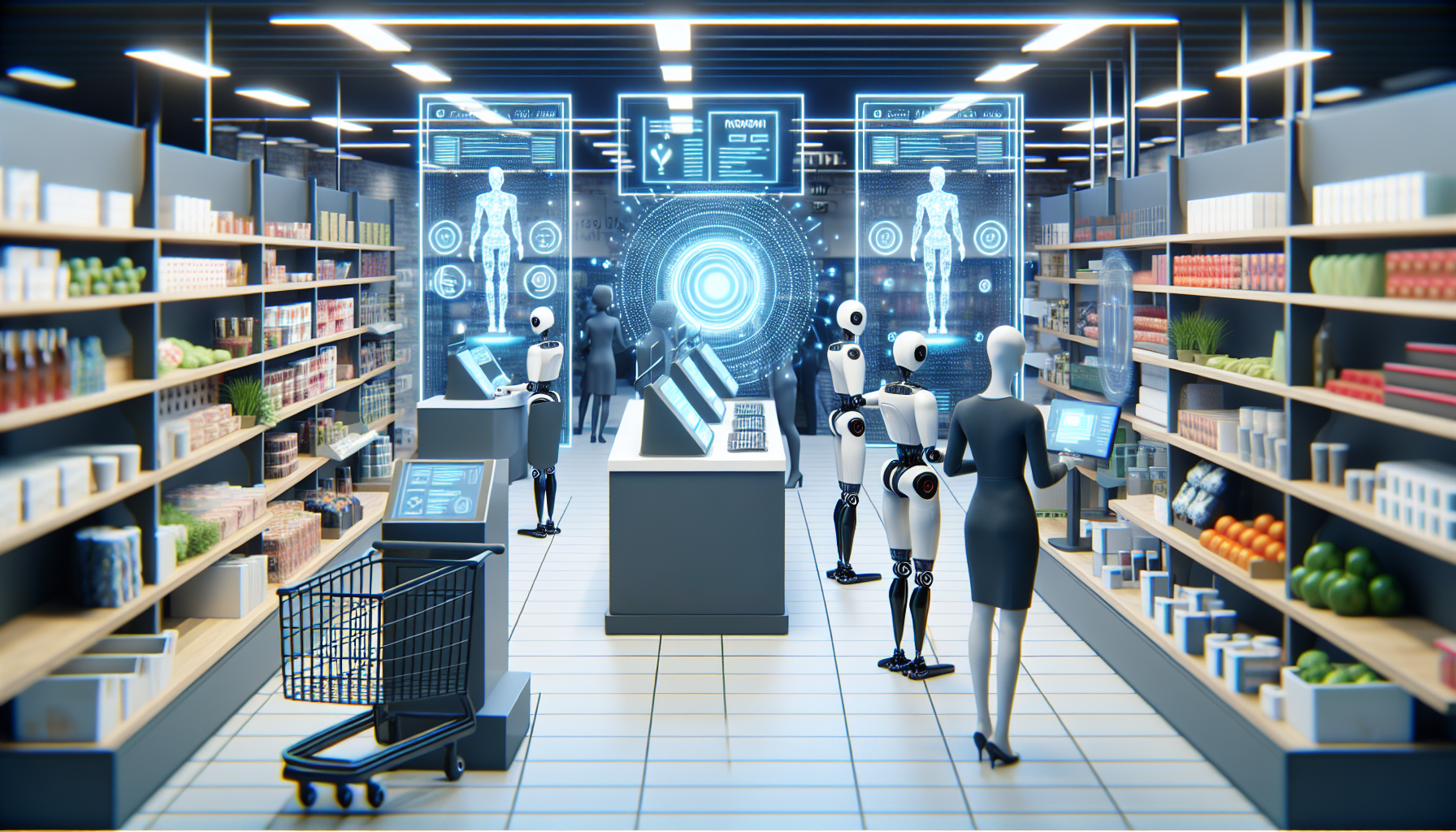
While e-commerce dominates the digital space, brick-and-mortar stores are utilizing AI to enhance the in-store customer experience. Retailers are using facial recognition technologies to identify returning customers, allowing staff to greet these individuals personally and recommend products tailored to their interests.
Furthermore, AI-driven analytics can track customer movement within a store, providing insights into popular areas and product placements. By understanding shopper behavior, retailers can optimize store layouts to enhance product visibility and increase sales. Interactive kiosks powered by AI guide customers in making informed decisions, bridging the gap between online and offline shopping experiences.
Dynamic Pricing Strategies
AI has revolutionized pricing strategies in retail, enabling dynamic pricing models that adjust prices in real time according to changes in demand, competitor pricing, and inventory levels. Retailers such as airlines and hotels have employed dynamic pricing for years; now, the retail sector is catching up.
Machine learning algorithms analyze various factors such as customer behavior, purchase patterns, and market demand to determine optimal pricing strategies. For example, if a retailer observes that a particular item garners significant attention but has low conversion rates, they can temporarily lower the price to increase demand. Such strategic price adjustments not only improve sales but also enhance customer satisfaction by offering perceived value.
Fraud Detection and Prevention
With the rise of online shopping comes the increased risk of fraud. AI technologies are crucial in identifying and preventing fraudulent activities in real time. Machine learning models can analyze transaction data and detect anomalies indicative of fraud, such as unusual purchase patterns or suspicious IP addresses.
Systems that utilize AI effectively flag questionable transactions and alert security teams, allowing retailers to take proactive measures before substantial losses occur. AI not only protects retailers but also builds customer trust, reassuring shoppers that their sensitive information is secure.
Omnichannel Integration
Creating a seamless shopping experience is critical for modern retailers. AI facilitates the integration of online and offline channels, allowing retailers to provide a consistent customer experience across platforms. Customers can browse online, check product availability in-store, and receive personalized recommendations regardless of the purchasing channel.
AI-driven platforms manage customer data across all touchpoints, enabling retailers to recognize returning customers whether they purchase via a desktop, mobile device, or in-store. This omnichannel strategy enhances customer loyalty and engagement, leading to higher conversion rates.
Future Trends of AI in Retail
As retailers continue to embrace AI, several key trends are emerging. Advanced predictive analytics will become increasingly sophisticated, allowing for deeper insights into customer preferences and behaviors. This includes the use of advanced algorithms that can analyze social media trends or customer feedback to shape product launches and marketing campaigns.
AI will also increasingly drive automation in supply chain management, improving efficiency from manufacturer to consumer. Retailers are likely to integrate autonomous vehicles and drones for delivery, optimizing logistics operations.
Moreover, ethical considerations surrounding AI will shape future deployments. Transparency in AI algorithms and how customer data is used will become increasingly important, ensuring that retailers respect customer privacy and uphold ethical standards.
Enhanced Visual Search Capabilities
An exciting development in AI for retail is the rise of visual search capabilities. With this technology, customers can upload images to find similar products online. Retailers like ASOS and Pinterest are already employing visual search, providing customers an engaging way to discover products that match their preferences.
Leveraging computer vision, these AI systems identify items in images and correlate them with product databases, ensuring users find precisely what they are looking for. This enhances consumer experience by simplifying the search process while also driving sales, as visually-driven customers are encouraged to purchase items that appeal to them.
The Role of AI in Marketing Strategy
AI also plays a vital role in marketing strategies for retailers. Machine learning algorithms can analyze customer data to segment audiences effectively create targeted ads that speak to specific demographics’ interests. Predictive modeling can identify potential customer journeys, allowing marketers to position products and campaigns at the right time, ultimately increasing conversion rates.
Additionally, automated marketing platforms use AI to manage campaigns across social media, email, and online advertising. By optimizing ad spend according to real-time data, retailers can maximize ROI, ensuring that marketing efforts are both efficient and effective.
Conclusion
AI in retail is not just a trend but a necessity for organizations aiming to remain competitive and foster customer loyalty. By integrating AI technologies into their operations, from personalized shopping experiences to efficient inventory management and effective marketing strategies, retailers can transform their customer interactions, optimize operations, and position themselves for future growth. The ongoing advancements in AI only promise greater enhancements to the retail landscape, ensuring that buyers enjoy seamless, engaging, and individualized shopping experiences.
 English