

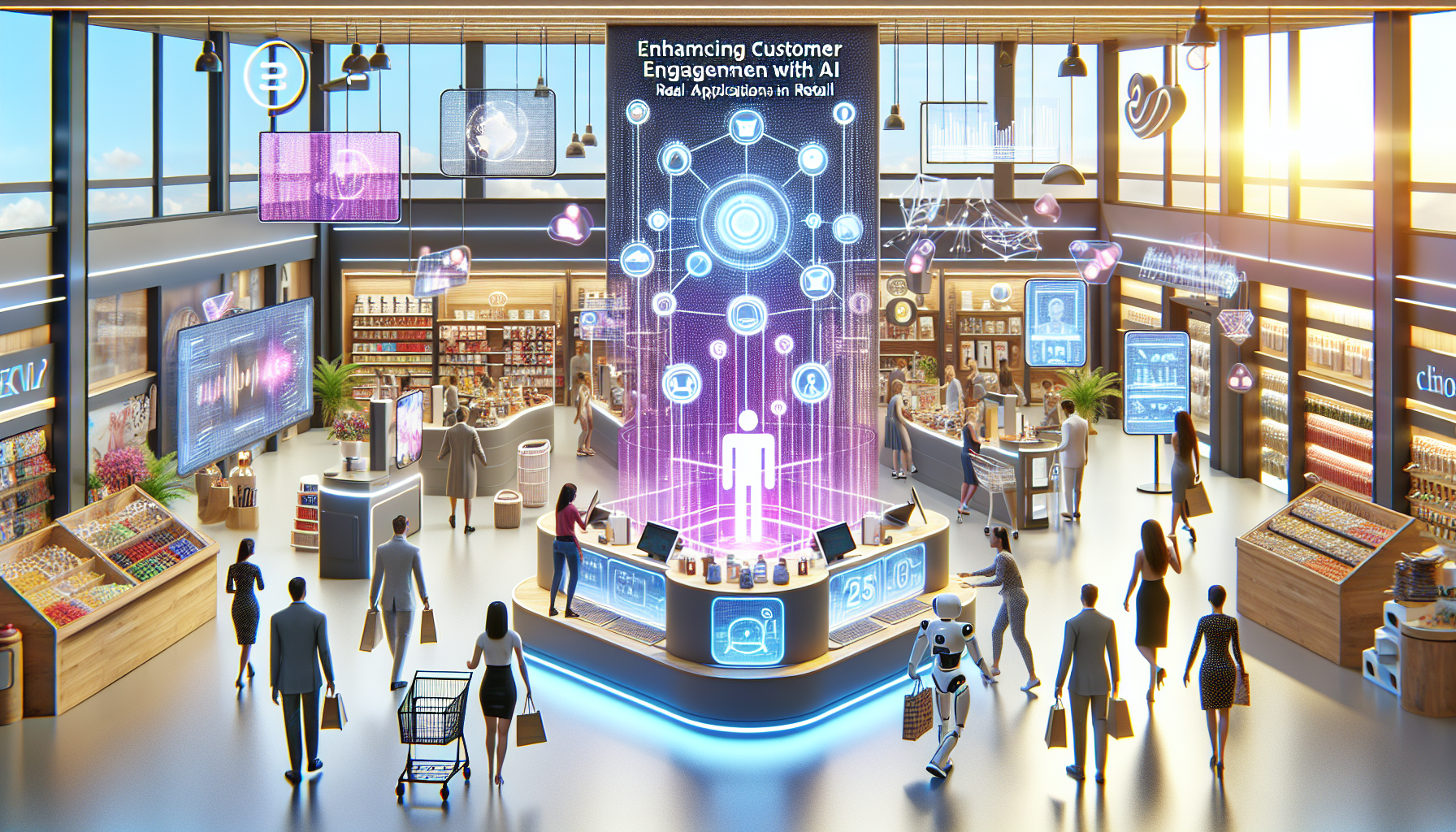

Enhancing Customer Engagement with AI: Real-World Applications in Retail
Understanding Customer Engagement in Retail
Customer engagement in retail refers to the interactions between consumers and brands through various touchpoints, designed to foster loyalty and enhance the shopping experience. In an increasingly digital landscape, retail businesses are turning to artificial intelligence (AI) as a powerful tool to drive engagement and personalize the customer journey.
Importance of Personalization
Personalization has become crucial for retail success, with consumers expecting tailored experiences. AI can analyze vast amounts of data collected from customer interactions, allowing retailers to understand preferences, predict behaviors, and thereby create customized shopping experiences.
AI-Powered Chatbots
One of the most visible applications of AI in retail is the use of chatbots. These AI-driven tools provide instant customer service, answer queries around the clock, and guide users through the buying process. For example, H&M employs chatbots on their website and social media platforms to assist customers, recommend outfits, and answer questions efficiently. Not only do these chatbots enhance customer satisfaction by providing immediate assistance, but they also gather valuable data about customer preferences, which can be used for further personalization.
Predictive Analytics for Product Recommendations
AI excels in predictive analytics, a game-changer for retail personalization. Algorithms analyze customer purchasing patterns and behavioral data to predict future buying behaviors. For instance, Amazon leverages AI to recommend products based on previous purchases and browsing history. This capability enhances customer engagement by presenting users with relevant product suggestions, significantly increasing the chances of additional sales.
Inventory Management and Supply Chain Optimization
Effective inventory management is vital for improving customer satisfaction. AI assists retailers in predicting product demand, thereby allowing for optimized stock levels. Walmart employs AI to analyze consumer buying patterns to forecast trends, ensuring popular products are always in stock. This not only meets customer demands but also reduces the potential for lost sales due to stockouts.
Dynamic Pricing Strategies
AI enables retailers to implement dynamic pricing strategies that adjust prices based on demand fluctuations, competitor pricing, and customer data. This application is exemplified by companies like Uber, where prices surge during high-demand periods. In retail, dynamic pricing can create a sense of urgency and encourages purchases by offering deals at the right moments.
Augmented Reality and Visual Search
Retailers are leveraging AI in augmented reality (AR) to enhance shopping experiences. IKEA, for example, has developed an AR app that allows customers to visualize how furniture would look in their homes before making a purchase. Coupled with visual search capabilities, where customers can upload images of products they’re interested in, retailers can streamline the search process. This technology helps in engaging visually-oriented consumers and making the shopping experience more interactive and enjoyable.
Customer Sentiment Analysis
Understanding customer sentiment is crucial for improving products and services. AI tools can analyze social media posts, reviews, and customer feedback to gauge sentiment toward a brand or product. Brands like Sephora use AI to analyze customer reviews, gaining insights into customer perceptions and preferences. This not only aids in product development but also allows for strategic marketing efforts that resonate with the target audience.
Enhanced Customer Loyalty Programs
AI can refine customer loyalty programs by providing personalized rewards based on shopping behaviors. Starbucks employs a sophisticated reward system that uses AI to track customer purchases and suggest personalized offers. This results in higher engagement levels, as customers feel valued and recognized. Personalized rewards increase retention rates and enhance the overall customer experience.
Omnichannel Retail Strategies
AI plays a pivotal role in creating seamless omnichannel experiences for consumers. By integrating data from various channels, retailers can offer consistent and personalized interactions across online and offline platforms. For instance, Target uses AI to unify customer data from their app, website, and physical stores, ensuring a cohesive shopping experience regardless of the medium chosen. This integration positively impacts customer engagement and increases brand loyalty.
Seamless Payment Experience
The integration of AI into payment systems is another way retailers enhance customer engagement. AI can analyze trends in payment preferences, enabling retailers to streamline checkout processes. Companies like PayPal utilize AI to enhance fraud detection while providing secure and user-friendly payment options. By making transactions smoother and more secure, businesses can increase customer confidence and encourage repeat purchases.
A/B Testing and Campaign Optimization
AI can facilitate A/B testing for marketing campaigns, allowing retailers to identify which strategies yield the best results. By analyzing consumer responses to various marketing materials, AI-driven tools can help refine messaging, imagery, and offers. Retailers like eBay use AI to optimize their advertising campaigns, ultimately boosting engagement and conversion rates.
Enhanced Customer Insights through Data Analysis
AI enables retailers to harness customer data to gain deeper insights into behavior and preferences. By analyzing customer data, retailers can identify trends and anomalies that manually sifting through data might miss. This enhanced understanding allows brands to tailor their marketing strategies and product offerings effectively.
Voice Assistants and Conversational Commerce
The rise of smart speakers and voice recognition software introduces a new era of shopping through conversational commerce. Brands like Walmart and Costco leverage voice-activated technology to enable customers to make purchases, check prices, or locate products through voice commands. This trend enhances customer engagement by providing a novel and convenient shopping experience.
Social Media and Influencer Analytics
AI tools can analyze social media interactions to gauge customer preferences and trends. Retailers can leverage tools that track influencer performance and sentiment analysis to identify which brand relationships yield the most engagement. By understanding how influencers impact customer behavior, brands can develop more effective marketing strategies.
Ethical Considerations in AI
While AI presents a myriad of opportunities for enhancing customer engagement, ethical considerations are paramount. Ensuring data privacy and transparency in how customer information is used is crucial. Retailers like Apple emphasize the importance of privacy in their AI initiatives, setting a standard for data handling that fosters consumer trust.
Continuous Learning and AI Evolution
AI technologies are continuously evolving, and retailers must stay ahead by adapting to these advancements. By investing in updated AI solutions, businesses can remain competitive and continue to enhance customer engagement. The iterative nature of AI means that as more data is collected, the insights derived become increasingly refined, allowing for superior customer experiences.
Tailoring Communication Channels
With AI, retailers can fine-tune communication channels based on customer preferences. By analyzing which platforms customers prefer, brands can optimize their outreach efforts, be it through email, social media, or SMS. This leads to more effective strategies in reaching customers, ensuring that messages are timely and relevant.
The Future of AI in Retail Engagement
The future promises even more significant developments in AI and customer engagement. As technology advances, retailers will tap into more sophisticated algorithms that provide real-time personalization and enhanced analytics. Innovations such as machine learning and deep learning will further empower retailers to meet the ever-changing demands of consumers.
Maximizing Customer Engagement through AI
Retailers who harness the power of AI technologies can enhance customer engagement across various aspects of the shopping journey. From personalized communication to streamlined processes and data-driven insights, AI is transforming the retail landscape, creating memorable experiences that keep customers coming back. Understanding and implementing these technologies will be crucial for retailers aiming to thrive in a competitive market.
 English