


Understanding AI in Healthcare
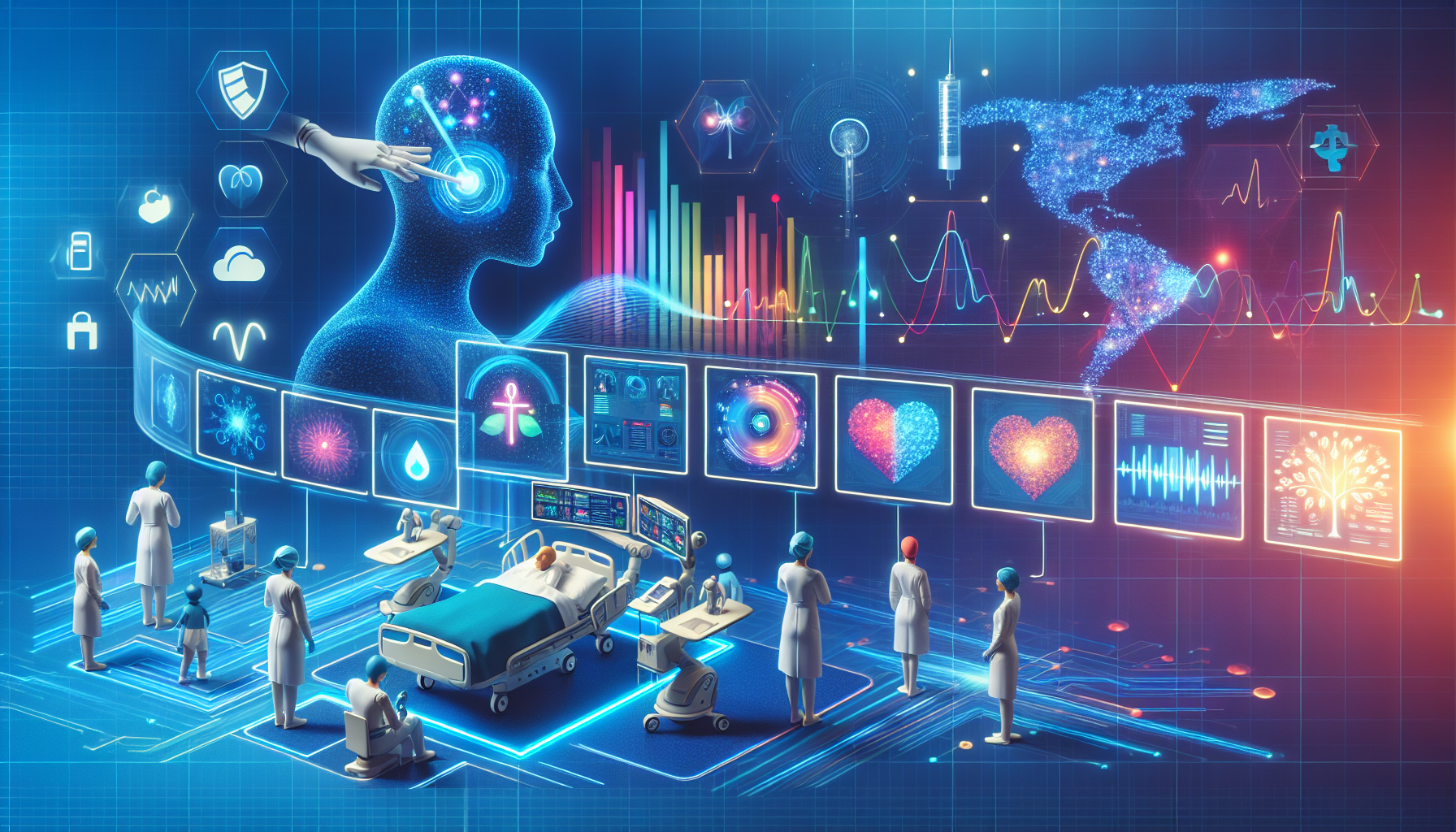
Artificial Intelligence (AI) is revolutionizing the healthcare landscape, offering solutions that promise improved patient outcomes through enhanced data analysis, personalized treatment plans, and operational efficiency. AI technologies, including machine learning, natural language processing, and predictive analytics, are being integrated into various healthcare segments. This article delves into several AI applications that drive innovations, demonstrating their significance in enhancing patient care.
Enhanced Diagnostic Accuracy
One of the primary advantages of AI in healthcare is its ability to improve diagnostic accuracy. AI algorithms can analyze medical images, such as X-rays, MRIs, and CT scans, with meticulous precision. For instance, Google’s DeepMind has developed AI systems capable of detecting eye diseases and cancers earlier than human practitioners. Clinical trials reveal that AI can identify tumors in mammograms with an accuracy exceeding that of radiologists.
Furthermore, AI can assist in interpreting pathology results faster and more accurately than traditional methods, reducing the chances of misdiagnosis and ensuring timely treatment interventions.
Personalized Treatment Plans
AI’s predictive analytics play a crucial role in creating personalized treatment plans. By analyzing a patient’s genetic information, medical history, and lifestyle data, AI algorithms can recommend customized treatment pathways. For example, IBM’s Watson for Oncology utilizes vast datasets to assist oncologists in devising tailored cancer treatment options.
By integrating AI with Electronic Health Records (EHR), healthcare providers can automatically analyze relevant patient data to generate personalized health recommendations, enhancing the patient experience and potentially leading to better outcomes.
Remote Monitoring and Telemedicine
AI is fundamentally reshaping telemedicine and remote patient monitoring. Wearable devices equipped with AI algorithms can track vital signs and alert healthcare providers about critical changes in a patient’s condition, enabling proactive management. Devices like Apple Watch and Fitbit monitor heart rates, detect irregularities, and offer insights that can lead to early diagnosis of conditions like atrial fibrillation.
In telemedicine, AI-powered chatbots act as first-contact tools, providing immediate responses to patient inquiries, summarizing health concerns, and guiding them through initial assessment processes before escalating to healthcare professionals. This not only enhances patient satisfaction but also reduces wait times and improves operational efficiency.
Predictive Analytics for Proactive Care
Predictive analytics, powered by AI, enables healthcare providers to forecast potential health risks before they arise. By analyzing vast amounts of patient data, AI can identify trends and predict outcomes such as hospital readmissions or the likelihood of developing chronic conditions. For instance, machine learning algorithms can assess a patient’s risk of heart disease based on their lifestyle, genetic factors, and previous health records.
Healthcare providers can use these predictions to implement preventive measures, schedule routine check-ups, and engage patients in their health management proactively. Hospitals employing predictive analytics have reported significant reductions in readmission rates and improved overall patient health.
Drug Discovery and Development
AI is transforming the drug discovery and development process, significantly reducing the time and cost associated with bringing new medications to market. Traditional drug development cycles can take over a decade and cost billions; however, AI accelerates this process by analyzing biological data and predicting how different compounds interact with targets.
Platforms such as Atomwise employ deep learning algorithms to quickly screen chemical compounds, identifying candidates that could effectively treat diseases. In 2020, this technology aided in discovering potential treatments for COVID-19 in record time.
Enhanced Efficiency in Administrative Tasks
AI automates numerous administrative tasks in healthcare settings, allowing staff to focus on patient care rather than paperwork. Administrative burdens, such as scheduling, billing, and maintaining patient records, are being streamlined through AI-powered systems.
Natural Language Processing (NLP) is particularly effective in transcribing physician notes and managing EHRs. By interfacing with clinical software, AI can extract relevant patient data, update records, and minimize clerical errors, improving operational workflow and freeing up valuable time for healthcare workers.
AI in Surgical Procedures
AI-enhanced robotic surgery systems are significantly improving surgical precision and patient outcomes. These systems, such as the da Vinci Surgical System, utilize AI to assist surgeons during procedures by providing high-definition visualizations and the ability to perform intricate movements with increased accuracy.
Such precision minimizes patient trauma, leading to quicker recoveries, reduced pain, and lower risk of complications. Additionally, AI can aid in surgical planning by analyzing data from previous surgeries, thereby recommending optimal approaches for specific surgeries.
Ethical Considerations in AI Implementation
As AI technologies proliferate in healthcare, ethical considerations must be prioritized. Concerns regarding patient privacy, the potential for algorithmic bias, and the necessity for transparency in AI decision-making processes are paramount. Healthcare organizations must ensure compliance with regulations like HIPAA while implementing robust cybersecurity measures to safeguard patient data.
Moreover, promoting diversity in the data used to train AI systems is essential in preventing biases that could compromise patient care. Continuous evaluation of AI tools is critical to ensure they uphold ethical standards while maximizing patient benefits.
Future Trends in AI-Driven Healthcare
The future of AI in healthcare is promising, with continuous advancements likely to yield innovative solutions. Integrating AI with genomics and other omics technologies can enhance personalized medicine further. Real-world evidence collection through AI can improve clinical trial designs and patient stratification.
Moreover, AI’s role in mental health is gaining traction as chatbots and virtual therapists provide immediate support and resources. Mental health applications are transforming how patients access care, breaking down previous barriers to treatment.
Conclusion
AI’s relevance in enhancing patient outcomes cannot be overstated. From improving diagnostics to creating personalized treatment plans and automating administrative processes, AI is at the forefront of healthcare innovation. As technology evolves, its integration into healthcare systems will likely continue to improve patient care, ensuring more efficient, accurate, and accessible health services for all.
 English