

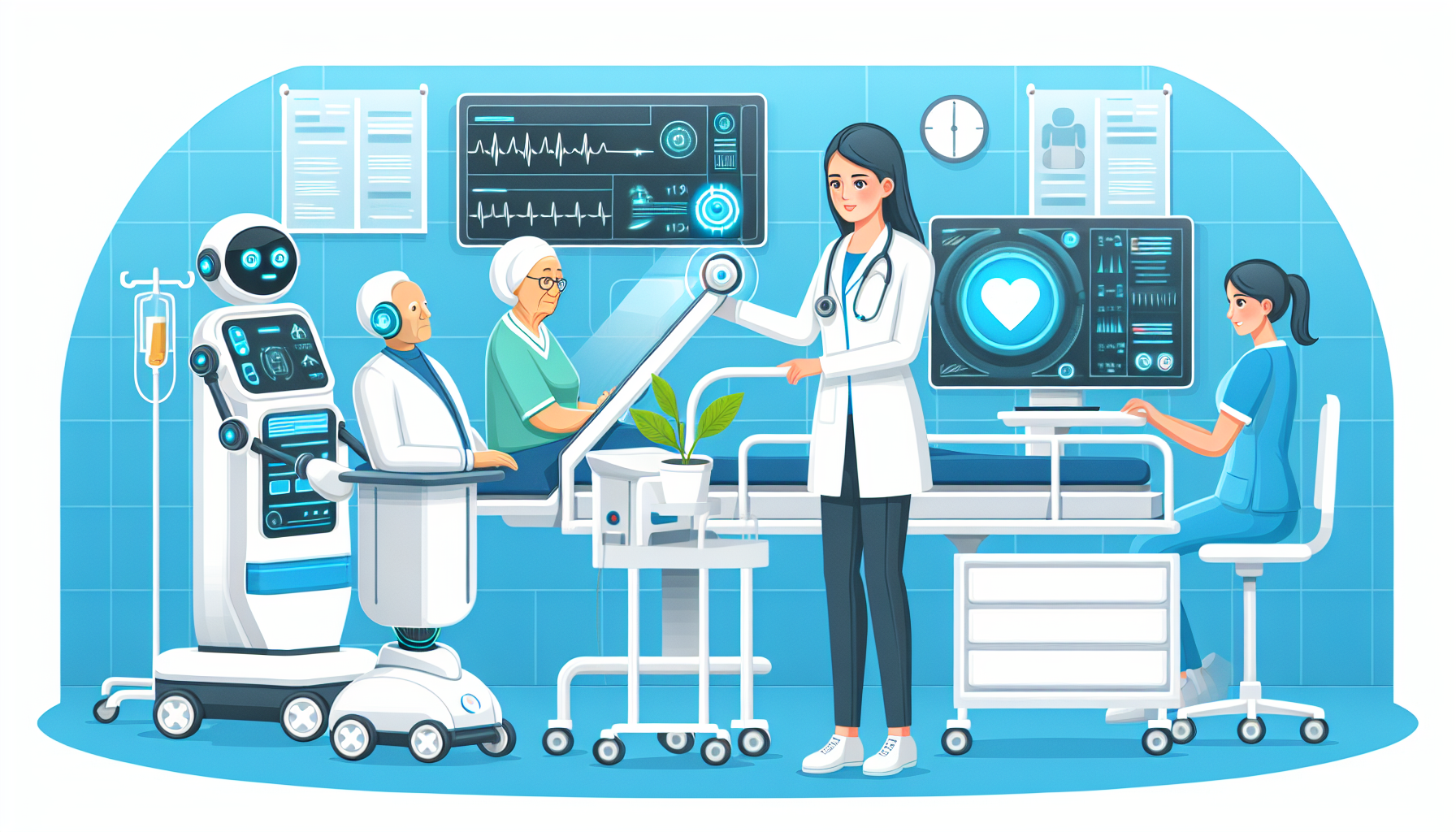

Improving Patient Outcomes with AI and Automation in Healthcare
The integration of Artificial Intelligence (AI) and automation in healthcare has ushered in a new era of patient care that prioritizes both efficiency and effectiveness. This technological evolution is transforming how healthcare providers approach diagnosis, treatment, and patient management, leading to improved patient outcomes across various domains.
Enhancing Diagnostic Accuracy
AI algorithms, particularly those leveraging deep learning, demonstrate remarkable prowess in analyzing medical data. For example, AI systems can process images from MRIs and CT scans to identify conditions like tumors or fractures at a much faster rate than human radiologists. Studies indicate that AI models can achieve diagnostic accuracy comparable to or even exceeding human specialists. Consequently, early detection of diseases allows for timely intervention, significantly improving prognoses and patient satisfaction.
Streamlining Administrative Processes
Automation in healthcare often pertains to streamlining administrative tasks that can consume valuable time and resources. By automating scheduling, billing, and patient record management, healthcare providers can allocate more time to direct patient care. Electronic Health Records (EHR) systems, powered by automation, can swiftly retrieve patient histories, thus enabling clinicians to make informed decisions quickly and effectively.
Personalized Medicine through Data Analytics
AI’s ability to analyze vast datasets is revolutionizing personalized medicine. Machine learning algorithms can identify patient-specific patterns and predict how individuals will respond to particular treatments. By tailoring therapies based on genetic, environmental, and lifestyle factors, healthcare providers can enhance treatment effectiveness. For instance, oncology treatments now increasingly utilize genetic profiling to determine the most effective drugs for specific cancer types, leading to improved recovery rates.
Remote Patient Monitoring
The advent of AI and automation extends to remote patient monitoring (RPM), where wearable technologies collect real-time health data. AI systems analyze these data streams to provide healthcare providers with insights into patient conditions. Early warnings generated by these systems can prompt timely interventions, reducing hospital admissions and ensuring patients receive appropriate care while remaining in the comfort of their own homes.
Enhancing Patient Engagement
Automated communication tools, such as chatbots and virtual health assistants, provide patients with immediate access to healthcare information. These tools can facilitate appointment scheduling, answer frequently asked questions, and provide medication reminders, thus enhancing patient engagement. Increased engagement often leads to improved adherence to treatment plans, resulting in better health outcomes.
Reducing Medical Errors
AI’s diagnostic accuracy extends to minimizing medical errors, a significant contributor to adverse patient outcomes. Algorithms can cross-reference patient histories, reducing the likelihood of prescribing contraindicated medications. Advanced decision-support systems offer clinicians evidence-based recommendations tailored to individual patient profiles, promoting safer clinical decision-making.
Optimizing Workflow Efficiency
Workflow efficiency is essential in healthcare settings, where time is often of the essence. AI-driven solutions automate routine tasks such as coding, billing, and appointment reminders, reducing the administrative burden on healthcare professionals. With less time spent on paperwork, clinicians can focus more on patient interactions, thereby enhancing the quality of care provided.
Predicting Patient Deterioration
AI models can predict potential patient deterioration by analyzing patterns from various data sources, including vital signs and historical health records. Early identification of at-risk patients allows healthcare teams to implement preventative measures, significantly decreasing morbidity and mortality rates. For instance, machine learning algorithms can assess data from real-time monitoring systems and alert medical teams about abnormal changes that necessitate immediate attention.
Telemedicine Integration
AI and automation enhance telemedicine, bridging gaps in healthcare access. Automated systems can triage patients before consultations, ensuring that healthcare providers prioritize cases based on urgency. This efficient patient flow maximizes resource utilization and improves outcomes by ensuring timely care, particularly for those in remote areas.
Impact on Nursing and Professional Caregivers
AI and automation are positively impacting nursing and caregiving roles. By handling routine data collection and administrative tasks, these technologies free up nurses and caregivers to focus on direct patient care. This shift not only enhances job satisfaction among healthcare professionals but also fosters a more compassionate and patient-centric environment that improves patient experience and outcomes.
Addressing Health Disparities
AI has the potential to mitigate health disparities by offering tailored healthcare solutions to underserved populations. By analyzing social determinants of health alongside traditional medical data, AI systems can identify specific community needs. Targeted interventions informed by these insights can lead to improved healthcare access and outcomes for marginalized communities.
Training Medical Professionals
AI-powered simulation tools are increasingly used in medical education, allowing healthcare students and professionals to practice skills in controlled environments. These tools enhance learning and patient care capabilities, as practitioners can hone their skills, receive immediate feedback, and improve their procedural proficiency without the risks associated with real-life scenarios.
Cost-effectiveness and Resource Allocation
While the initial investment in AI and automation might be substantial, the long-term benefits include cost savings from efficiency gains. Optimizing resource allocation through predictive analytics can lead to a reduction in unnecessary procedures and hospitalizations, ultimately lowering healthcare costs for both providers and patients.
Collaborating with AI
Healthcare professionals are starting to view AI not as a replacement but as a partner that augments clinical judgment. By combining human expertise and AI capabilities, healthcare teams can develop more nuanced treatment plans that leverage data-driven insights while considering individual patient preferences and values.
Future Perspectives
The future of AI and automation in healthcare holds immense promise. Continued advancements in natural language processing may further enhance the ability of AI systems to understand complex clinical discussions and provide relevant insights. As ethical considerations and regulatory frameworks develop, the safe integration of AI technologies will become more prevalent, ensuring that the advantages of these innovations can be harnessed responsibly.
Ethical Considerations in AI Implementation
As healthcare organizations increasingly rely on AI, ethical considerations surrounding data privacy, algorithm bias, and accountability must be addressed. Ensuring diverse data representation within AI training sets is essential to minimize biases that could adversely affect patient care, particularly for historically marginalized groups. Consequently, healthcare organizations must establish frameworks to oversee AI ethics, creating systems that protect patient rights and ensure equitable access to care.
Conclusion
The application of AI and automation is undeniably changing the landscape of healthcare, with significant implications for patient outcomes. From enhancing diagnostic accuracy and streamlining administrative processes to enabling personalized medicine and improving patient engagement, the benefits of these technologies are profound and transformative. As healthcare systems continue to evolve, embracing AI and automation will be crucial for delivering exceptional patient care and achieving improved health outcomes across diverse populations.
 English