

Understanding Task Automation in Business
Task automation involves using technology to execute tasks with minimal human intervention. Businesses increasingly seek automation solutions to enhance operational efficiency, reduce error rates, and free up employees to focus on higher-value activities. This article dives deep into two popular task automation tools: ChatGPT and Zapier, comparing their capabilities and use cases for your business success.
What Is ChatGPT?
ChatGPT is an AI language model developed by OpenAI. It generates human-like text based on input prompts and can be utilized across various business functions. These include customer support, content creation, data analysis, and more. ChatGPT excels in understanding natural language, which allows businesses to automate interactions and generate content efficiently.
Features of ChatGPT
- Natural Language Processing (NLP): ChatGPT can understand and generate text in a contextually relevant manner, making conversational interactions more fluid.
- Contextual Understanding: It can maintain the context of ongoing conversations, allowing for enriched customer interactions.
- Application Versatility: ChatGPT can be used in chatbots, email responses, and content generation, making it a versatile tool for diverse business needs.
What Is Zapier?
Zapier is an automation tool that connects various web applications to automate workflows. By creating “Zaps,” users can set parameters that trigger actions across different platforms when specific conditions are met. This tool is notable for its ability to bridge applications that do not natively integrate, thereby enhancing productivity.
Key Features of Zapier
- Connects 5,000+ Apps: Zapier supports a multitude of applications, allowing for extensive automation possibilities.
- User-Friendly Interface: The drag-and-drop functionality simplifies the creation of automated workflows, requiring no coding knowledge.
- Customizable Workflows: Users can non-linearly structure Zaps, offering flexibility to accommodate unique business processes.
ChatGPT vs. Zapier: Use Cases
1. Customer Support
ChatGPT:
- ChatGPT can be implemented as a conversational agent or chatbot, providing real-time support to customers. It can handle common inquiries, provide information about products, and manage troubleshooting inquiries.
- This leads to reduced wait times and improved customer satisfaction.
Zapier:
- Zapier can route customer inquiries from a platform like Facebook Messenger to your email or support ticket system, automating the handoff and response management processes.
- It can also trigger alerts or notifications across your team via Slack when customer interactions require human follow-up.
2. Content Generation
ChatGPT:
- Marketers can use ChatGPT to generate blog posts, social media content, or product descriptions, thus saving time on ideation and initial drafting.
- It can provide summaries, SEO-optimized content, and ideas tailored to target audiences, enhancing content strategy.
Zapier:
- Zapier can automate the publication of new blog posts by connecting your content creation tools to your website or social media accounts.
- It can also trigger a series of posts to promote newly published content automatically, extending the reach of your marketing efforts.
3. Data Management
ChatGPT:
- While primarily focused on text, ChatGPT can assist in data analysis and interpretation by summarizing reports or generating insights from raw data entries.
- This can help managers quickly understand trends or actions that need to be taken based on data.
Zapier:
- Zapier excels in managing data across different platforms. For example, it can automatically input form submissions from Google Forms to a Google Sheet, consolidating data for analysis.
- Additionally, Zapier can send automatic notifications when specific data thresholds are met or anomalies are detected.
Pricing: ChatGPT vs. Zapier
ChatGPT Pricing:
ChatGPT offers various plans, including a free tier for casual users and premium plans for businesses needing increased usage. Pricing often varies based on the complexity and demands of the tasks automated.
Zapier Pricing:
Zapier operates on a tiered subscription model, including a free plan with basic functionality and paid plans that offer advanced features, increased Zaps, and premium app integrations. Pricing can scale significantly based on the number of workflows required and the connected apps.
Integration: Compatibility and Community
ChatGPT:
- ChatGPT can be integrated into existing platforms via APIs, making it flexible for customized applications. However, it requires developers to handle the integration aspects and ensure that it works seamlessly with existing systems.
Zapier:
- Zapier’s strength lies in its vast library of pre-built integrations, which means users can create connections between disparate systems without needing technical expertise.
- The extensive community creates resources, templates, and support forums that help users optimize their automated processes.
Scalability and Business Growth
ChatGPT:
- As your business grows, ChatGPT can evolve with it, allowing for more complex queries and interactions. Continuous model improvements from OpenAI ensure that ChatGPT remains relevant and effective, adapting to new market trends.
Zapier:
- Similarly, Zapier offers scalability through its range of plans and capabilities, allowing businesses to add Zaps as needed without substantial overhauls in their existing systems.
- Its capability to integrate newly launched applications ensures that businesses can adapt quickly to operational shifts.
Security and Compliance
ChatGPT:
- OpenAI is committed to ethical usage, but businesses should vet the output for compliance, as AI-generated content may inadvertently violate specific regulations or guidelines.
Zapier:
- Zapier prioritizes user data security with encryption and compliance with GDPR, ensuring that data transferred between applications is secure. Businesses must remain vigilant over connected app permissions.
Final Thoughts
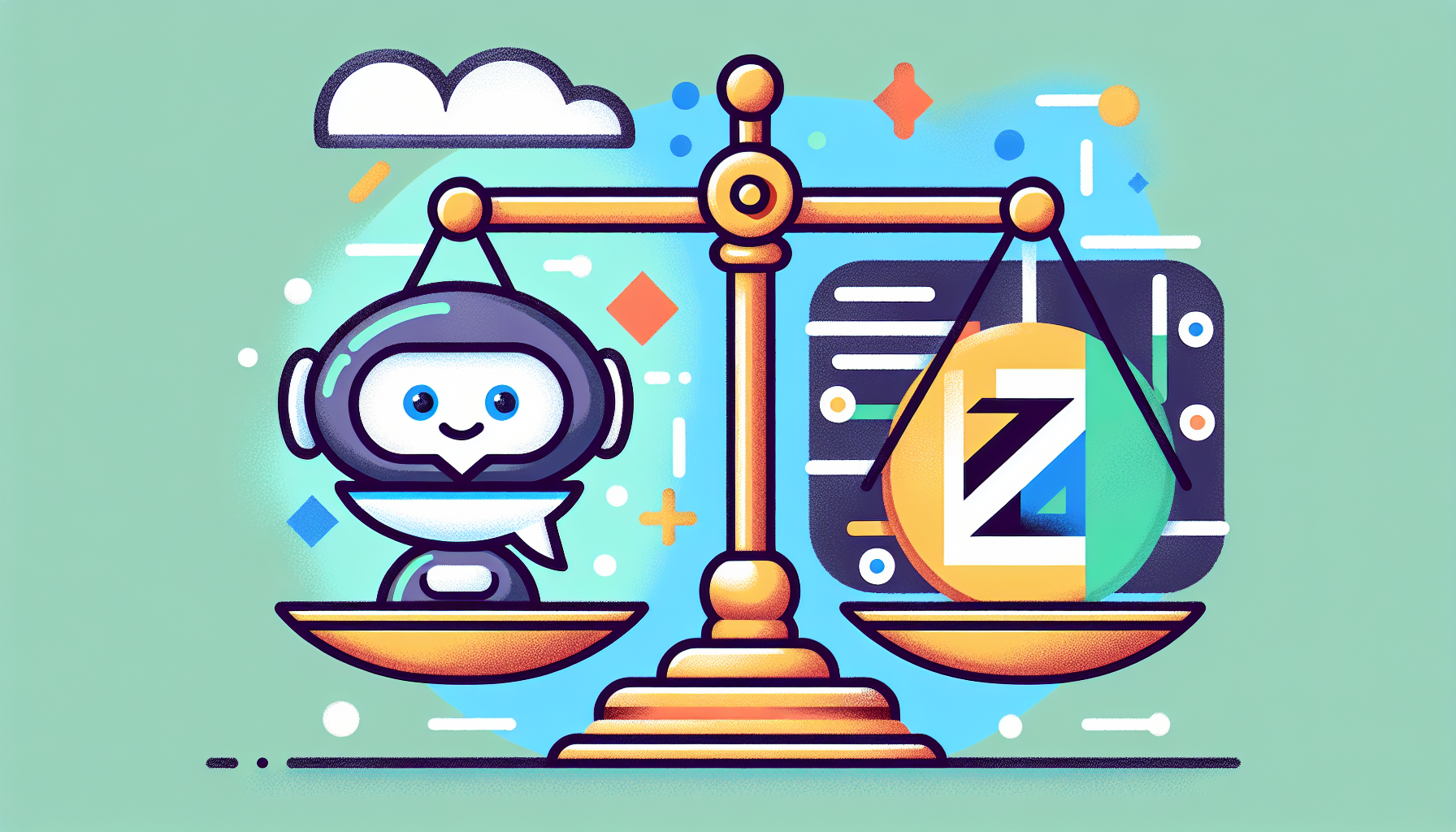
Both ChatGPT and Zapier provide unique advantages in the realm of task automation for businesses. ChatGPT shines in natural language tasks, enhancing customer interaction and content generation, while Zapier excels in connecting a wide array of applications to streamline workflows effectively. The choice between these tools largely depends on your business’s specific automation needs, desired integrations, and the complexity of tasks to be automated. Integrating both tools strategically can lead to exponential improvements in productivity and business outcomes, leveraging the strengths of each solution.
 English