

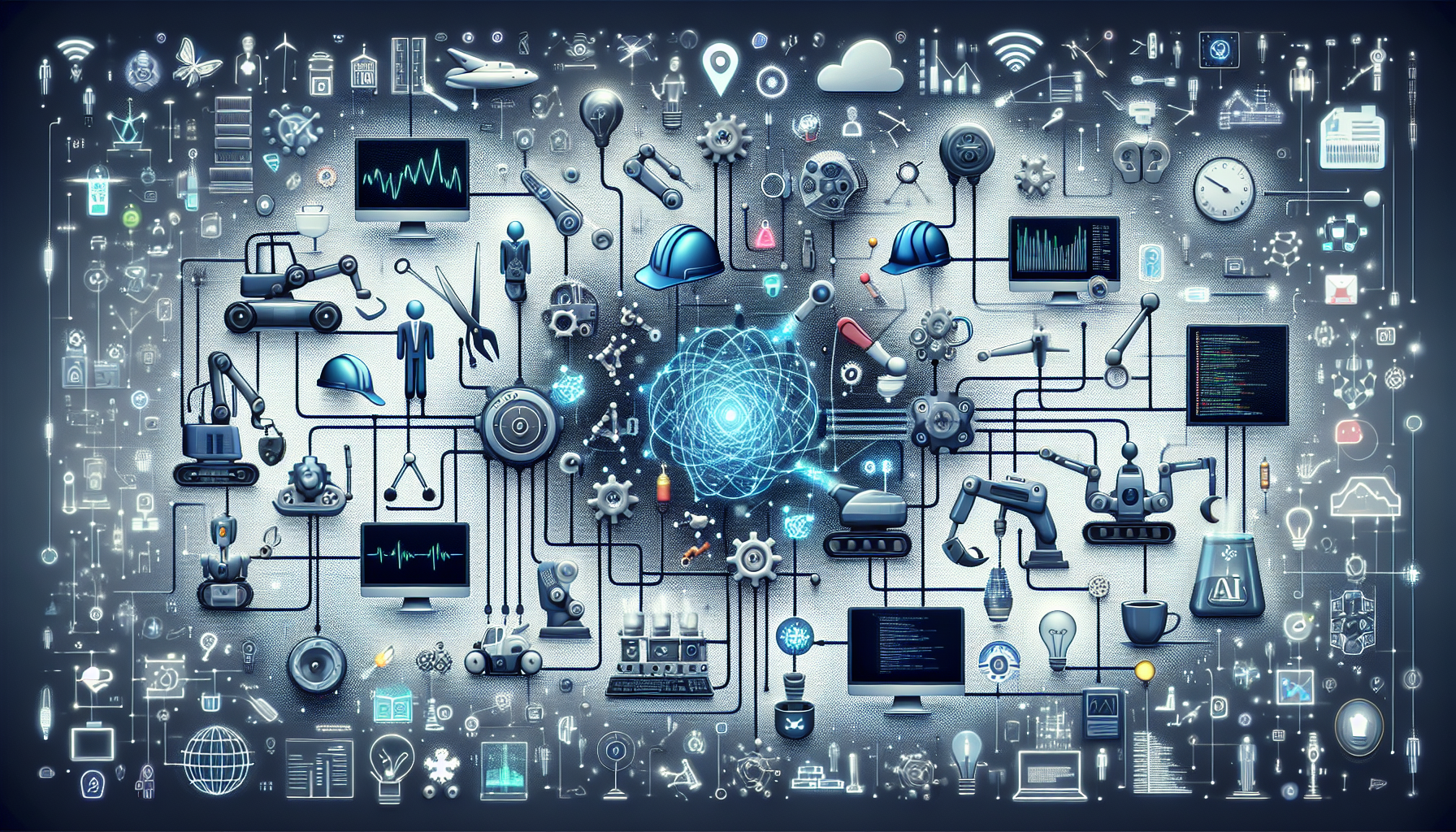

The Future of Work: How AI is Reshaping Job Roles Across Industries
Understanding AI’s Role in the Workplace
Artificial Intelligence (AI) is no longer a matter of speculation; it is a defining characteristic of modern workplaces. Spanning various sectors, AI systems are engineered to optimize workflows, improve productivity, and support decision-making. From data entry to customer service, AI technologies are being integrated to enhance human capabilities rather than simply replace them.
Transforming Job Roles
As AI technologies evolve, they are reshaping traditional job roles across a plethora of industries. This transformation can be analyzed through various lenses, such as skill requirements, employment levels, and the future of remote work.
1. Automating Repetitive Tasks
One of the most significant impacts of AI is the automation of repetitive tasks. Industries like manufacturing, finance, and customer service are leveraging AI algorithms and robotic process automation (RPA) to perform mundane tasks. For instance, in the manufacturing sector, AI-powered robots can handle the assembly line, ensuring precision and efficiency. Similarly, in finance, AI can analyze vast datasets in a fraction of the time it would take a human analyst, allowing firms to allocate human resources to more complex decision-making roles.
2. Enabling Augmented Intelligence
Rather than wholly replacing human jobs, AI often complements them through augmented intelligence. Employees are now equipped with AI-driven tools that enhance their productivity. For example, in healthcare, AI algorithms assist doctors in diagnosing diseases by analyzing medical images more accurately and quickly than the human eye can. This support enables healthcare professionals to focus on patient care while significantly reducing diagnostic errors.
3. Skills and Reskilling
With AI’s integration into various industries, the demand for new skill sets is paramount. Workers must adapt to a more technologically advanced work environment, necessitating extensive training and continuous learning. Upskilling initiatives are more critical than ever, encouraging employees to become proficient in programming, data analysis, and machine learning. This trend not only creates a more adaptable workforce but also ensures that human talent remains relevant alongside emerging technologies.
AI in Specific Industries
1. Healthcare
AI is revolutionizing healthcare delivery. Machine learning algorithms can predict patient outcomes, individualized treatment plans, and even determine the best therapeutic approaches. Virtual Health Assistants (VHAs) provide instant healthcare advice, triaging patients effectively and streamlining care delivery. However, these advancements underscore the importance of maintaining human oversight in medical decision-making to ensure ethical practices.
2. Retail
In the retail sector, AI revolutionizes how businesses approach inventory management, customer service, and marketing. Predictive analytics allows retailers to tailor their offerings based on consumer behavior data, enhancing the shopping experience. Chatbots and virtual assistants have transformed customer service, providing immediate responses to inquiries and troubleshooting, thus freeing human employees to focus on complex customer interactions.
3. Finance
AI’s footprint in finance has transcended analytics, influencing fraud detection and risk assessment processes. Automated trading systems utilize AI algorithms to make rapid market decisions based on real-time data, drastically changing the role of human traders. Financial institutions are leveraging machine learning to detect irregular patterns in transactions, allowing for real-time interventions in fraud prevention.
4. Education
The education sector is seeing a rise in personalized learning powered by AI. Adaptive learning platforms have the potential to modify course materials based on individual student performance, providing customized educational experiences. Teachers can utilize AI to identify struggling students and adapt their teaching techniques accordingly. However, the pivotal role of educators remains paramount as they guide learners through complex emotional and social dynamics.
Remote Work and AI
The COVID-19 pandemic accelerated the adoption of remote work and highlighted the role of AI in facilitating this shift. Tools powered by AI, such as video conferencing platforms and collaboration software, have become indispensable for businesses. Project management applications equipped with AI capabilities help teams track productivity and streamline communication, making remote collaboration more effective.
Challenges and Ethical Considerations
Despite the benefits AI brings, several challenges and ethical concerns accompany its rapid adoption. Issues such as data privacy, algorithmic bias, and job displacement are pressing topics that demand attention from policymakers and business leaders. The conversation surrounding responsible AI use is critical in ensuring that technology serves as a benefit rather than a hindrance to societal progress.
The Workforce of Tomorrow
As industries embrace AI’s capabilities, the workforce must adapt to a changing job landscape. The future of work will not see the eradication of jobs but rather a transformation of roles. Companies may prioritize hiring individuals who possess advanced analytical skills, creativity, and emotional intelligence—traits that AI cannot replicate.
Collaborative roles that require teamwork, critical thinking, and adaptability will thrive, while positions centered around routine tasks may continue to diminish. The emphasis on human-centric skills will be essential in creating workplaces where both AI and human workers synergistically contribute to organizational success.
The Role of Education
Educational institutions will significantly influence the future workforce by integrating AI-centric curricula. STEM (Science, Technology, Engineering, and Mathematics) education will gain importance, accompanied by an emphasis on soft skills training. Lifelong learning will be essential, as professionals will need to engage in continuous education to remain competitive in the job market.
Embracing the Future
Organizations that embrace the potential of AI, invest in employee training, and prioritize ethical considerations will set the standard for the future of work. A proactive approach will enable businesses to not only survive but thrive in a landscape defined by technological advancement. As we move forward, it’s essential for companies, workers, and educational institutions to work together to navigate the complexities of a rapidly evolving workforce, ensuring that the transition to an AI-driven work environment is equitable and inclusive.
 English